4 Chicago BevTech Brands Changing How We Imbibe
It’s never been a better time to be a food and beverage startup.
Creativity in this sector blossomed during the pandemic, and the direct-to-consumer market has flourished ever since. Brands making everything from premium tinned fish and not-your-college-dorm’s instant noodles to probiotic soda and hemp THC drinks are jumping from social media darlings to grocery store endcaps to Fortune 500 acquisitions in the blink of an eye.
Chicago has plenty of homegrown brands getting into the mix, but with patio happy hour season fast approaching, we were particularly curious about what’s going on with local beverage entrepreneurs.
We got to catch up with innovators from four Chicago brands making waves in the bevtech world, and we’re excited to give them a shout-out and share what they’ve been up to.
hightail
Anna Baskin was a weed skeptic. A bad time with a joint in college was enough to set her off the stuff for many years to come. Then, as she got older, like so many of us, the two glasses of wine that used to take the edge off turned into two-day hangovers.
Much to her surprise, THC beverages were what she’d been missing: a buzz that didn’t leave her bedridden the next day. But most of the drinks on the market were (and still are) 10mg THC, while she and many of the women she spoke to were biting their 5mg gummies in half and going straight to bed.
“Maybe it’s because I’m Chicago-based, but I was like, ‘Who wants one drink?’” Anna told us. “I want to be the rosé all day, or the Miller Lite of this category, where you feel very comfortable having a handful.”
So Anna created hightail with 1.5mg THC mixed with 3mg of uplifting CBG rather than sleepy CBD.

But she didn’t set out to just make another weed drink. She wants to be a wellness platform for women and parents who put their health first and don’t have time for hangovers. With that in mind, her product line includes hightail halo, a sparkling tea drink free from alcohol, THC, and jittery caffeine that delivers a botanical boost of energy and focus.
Anna was met with some hesitation from what she calls “wine moms who say they don’t do drugs.” So to get the word out, she meets those busy women where they are, hosting pop-ups at venues like pilates studios and book clubs. “I love being at book clubs. I’m trying to find the harried mom who doesn’t have time to go out, but she does go to a book club,” she said. “And a ton of people are not drinking alcohol right now, so they’re delighted they can have a little something.”
Hightail mostly sells direct-to-consumer on their website, but can also be found in select western suburban liquor stores, bars, and restaurants. You can order from siphightail.com if you’d like a little something yourself.
Pilot Project
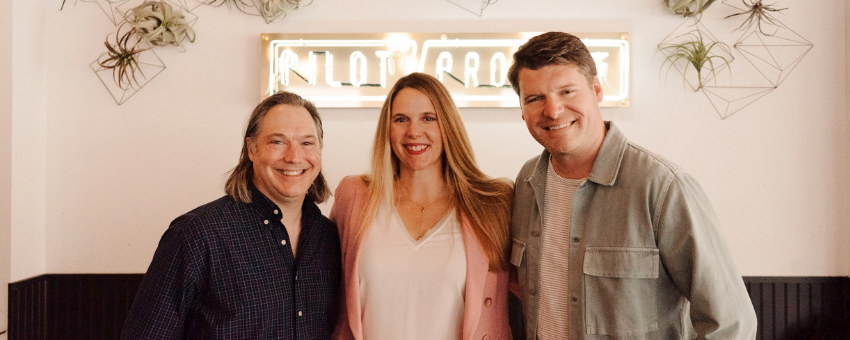
You don’t need to build your own recording studio to make an album as a musician, so why do you have to build your own brewing facility to make beer? That's why music industry veteran Dan Abel and his co-founder Jordan Radke created Pilot Project to be just like a recording studio, but for beverage entrepreneurs.
With breweries in Logan Square and Milwaukee and a taphouse/cocktail lounge in Wrigleyville, Pilot Project is bringing beer (and canned cocktails and hard kombucha and more) made by independent, often underrepresented creators to the masses.
Wait, aren’t we living through The End of Alcohol? Alcohol sales and consumption are indeed at historic lows, and Pilot Project does support low- and no-ABV products, but Dan doesn’t think drinking is going away. He does think that our relationship to alcohol is changing, and we’ve moved on from a recent past of seeking the highest-possible-ABV beer. A vibe shift, not a sea change.
“We’re transitioning to a new trend, and that trend is flavor,” Dan. said. And with offerings like Donna’s Pickle Beer and a fruit punch sour from Brewer’s Kitchen, it’s hard to argue.
Pilot Project aims to be a vehicle for that kind of creativity, but Dan’s honest about how they can’t completely smooth the way to success.
“Just because we’re lowering the barrier to entry doesn’t mean you’re not going to face the same challenges as any entrepreneur,” Dan said. So he looks for founders who are what he calls “the right type of crazy” and who come in with strong brand and product visions already locked down. (P.S., If that sounds like you, you can apply to Pilot Project’s incubation program here.)
We’ve already seen a lot of wild and wonderful drinks come out of Pilot Project, and with their new, expansive production facility getting started in Milwaukee, there will be plenty more to come. If you want to try their latest hits, you can check out their website for locations and menus.
TopShelf
TopShelf’s alcohol-infused freezepops are full of fun and unique flavors, from classics like strawberry lemonade to homegrown combinations like grapefruit and Malört. Born from Bucktown’s own Ava’s Italian Ice, TopShelf was inspired by requests for more “grown-up” treats from parents grabbing desserts for their little ones.
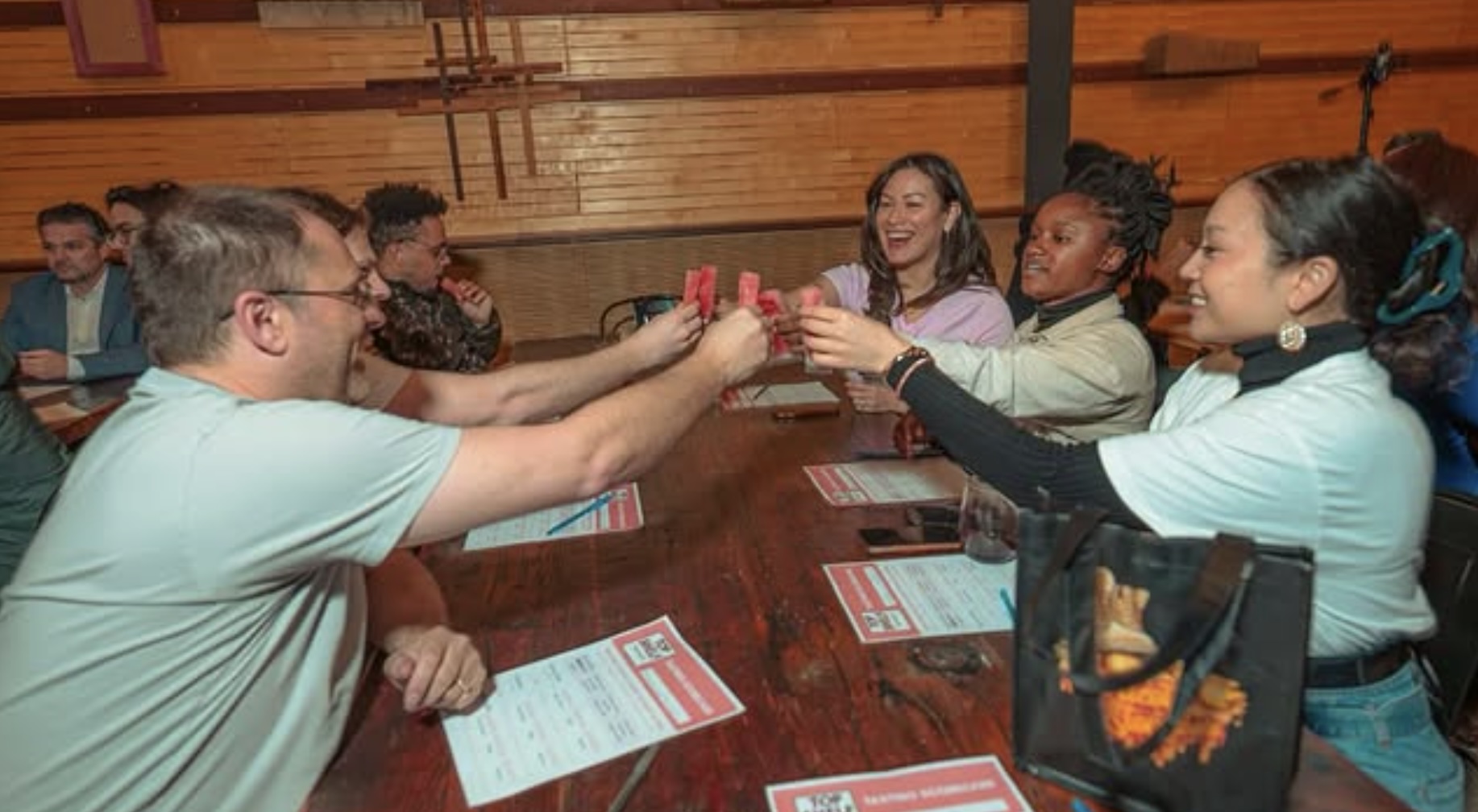
Joe and Marisa Cruz founded Ava’s Italian Ice to share healthy treats with their daughter and other children. Italian ice from Italy is very different from what we think of it here in the States - a light treat made with real fruit. It was important to them that TopShelf reflect that same commitment to quality. They took their time getting it right, spending three or four years figuring out how to freeze premium alcohol and pair it with organic fruit in interesting flavor combinations.
Dan Hernandez, now a partner with TopShelf, met founder Joe Cruz through a mutual friend and got to know him through a Saturday basketball league.
“Joe was like, ‘Hey Dan, you still go out? You want to try this freezepop?’” Dan H. recalls. “I tried it out, and I think they just hit it right on the head with delivering what the people wanted.”
TopShelf has no artificial ingredients, simply organic fruit and premium liquor pairings. Dan H. says most spiked freezepops on the market grew out of alcohol companies trying to figure out how to add fruit flavors, while TopShelf is really a fruit business figuring out how to add alcohol. And you can taste the difference in Ava’s recipes, which are, “locked in a vault” as Dan H. put it.
Creating new flavors can be something of a learning curve, but as Dan H. tells us, “You can’t go wrong with organic fruit. Organic fruit itself never tastes bad.”
Scaling a brand focused on high-quality ingredients and local connections takes time. Joe, Marisa, and Dan H. want to form a strong foundation not just as a family brand but as a brand with roots in Chicago and the Midwest, and then expand nationally.
As of right now, TopShelf only takes catering and private label orders, so event organizers can show them off at their next beach party or event. Contact them today to bring TopShelf to your next event. The rest of us will have to wait patiently.
Zenblen

Sometimes the pause you need isn’t something that helps you unwind, but something to fuel you through the rest of your day. Zenblen founder Tom Zhang, a former college athlete, started making smoothies with a mini blender at his desk while working as a strategy consultant. His busy colleagues often skipped breakfast, so he quickly made a name for himself as the smoothie guy, convincing management to give him a small budget for a Friday smoothie bar.
He converted many smoothie lovers but few smoothie makers. “There was a fear of cleaning the blender,” Tom said. “Nobody wanted to clean the blender.” Relatable!
He saw that the friction in a lack of time, ingredients, and hardware among busy professionals created a space for something automatic but healthy. The idea for a smoothie kiosk came together right around when Farmer’s Fridge, now ubiquitous in airports nationwide, was showing just how much you could do with fresh, healthy ingredients and an automated delivery system.
Tom tells us that Zenblen kiosks are designed to “glorify the blending moment” so consumers can see exactly what goes into their drink as it’s made. Smoothie bar regulars will find familiar favorites like bananas and berries along with on-trend protein boosts.
All the brands we talked to are firmly rooted in the Chicago entrepreneurship communities, and Zenblen is no exception. Tom’s a University of Chicago alum, and he took the business through the Booth School of Business’s New Venture Challenge accelerator. The Zenblen team designed the kiosks with support from mHub, and their offices are now the hard tech incubator’s neighbor.
“One of our goals is to make Chicago the smoothie capital of the world and then bring it coast to coast,” Tom said.
For now, Zenblen smoothies are available 24/7 in busy places around Chicago like college campuses and hospitals, where someone might want a healthy snack beyond the typical smoothie bar hours. Learn more about Zenblen and find a kiosk near you at Zenblen.com.
Put Your Drinks Up!
The next chapter of Chicago's food and beverage scene isn't being written by the big conglomerates. It's being written by a mom who didn't want a hangover, a music industry vet who wanted a recording studio for beer, a fruit-first family from Bucktown, and a smoothie guy who got tired of cleaning the blender. Keep an eye on all of them — and in the meantime, go try their stuff.
Related Articles